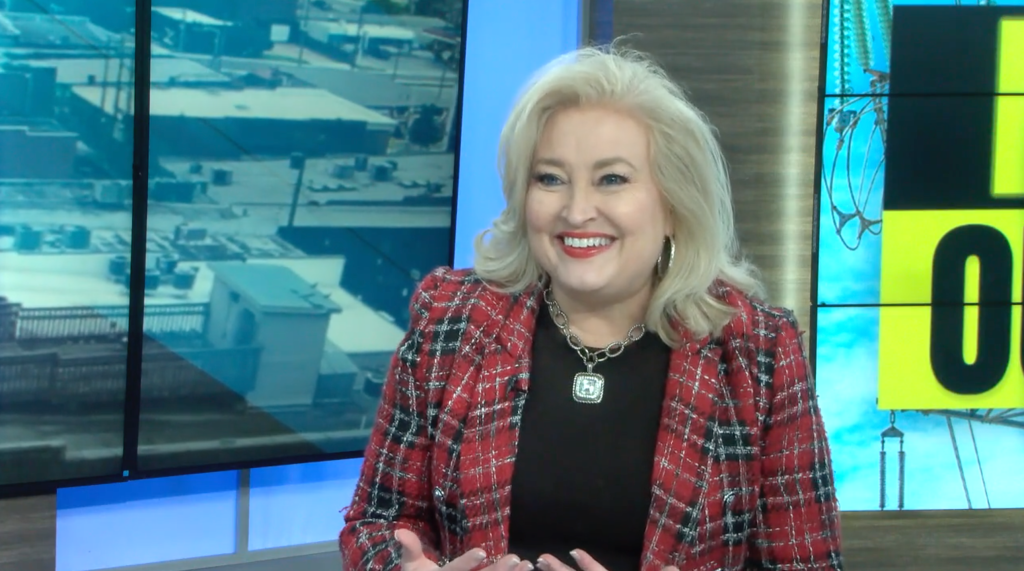
Nearly six years after COVID-19 upended daily life, KAIT evening anchor Diana Davis is reflecting on the early warning signs and how the pandemic forever changed journalism.
When news of a mysterious virus overseas began making headlines, veteran KAIT evening anchor Diana Davis remembers the uncertainty spreading almost as fast as the disease itself.
“It was an unknown,” Davis said. “I can remember the buzz coming from the national media that this thing was headed our way. And that it had hit Europe, and you could see the red dots of cases all over Europe.”
According to the World Health Organization, there were nearly 780 million cases of COVID-19 across the world with over 100 million just in the United States.
Davis had already spent 30 years at KAIT when COVID-19 rocked the world, but she said nothing in her career compared to the magnitude of the pandemic.
“It was just so alarming,” she said. “And you’re thinking, ‘How is this gonna end? Is it gonna end okay? Are we gonna be okay?’”
Almost overnight, COVID-19 changed the way people lived, and the way journalists worked. Inside newsrooms, familiar routines disappeared as safety precautions took over.
“You go from a vibrant newsroom, with lots of people and talking,” Davis said. “Then you come in and you have to put these masks on. You couldn’t have a co-anchor. The weather person had to be far away. And we could not be in close spaces for very long at all.”
According to a 2020 survey by the International Center for Journalism, 30% of the respondents said that their news organizations had not supplied field reporters with a single piece of protective equipment during the first wave of the pandemic.
This created challenges and forced journalists to make tough decisions throughout the pandemic. Was their health or career going to be more important?
Despite the challenges, Davis said the experience pushed journalists to adapt quickly and learn new skills.
“I learned how to manage the equipment and how to switch backup,” she said. “I kind of felt like a student again, because I had to learn how to make this happen. And you do, you adapt.”
Looking back, Davis said she’s proud of how the profession evolved during one of the most difficult periods in modern history.
“It taught us, as journalists, that we can work in many different environments,” she said.
Journalism isn’t meant to be done in any one way, that’s why so many people can succeed in the industry, but learning how to adapt, as Diana Davis did, will only make it stronger as it continues to change.
 Inside Family Dynamics
Leave a comment