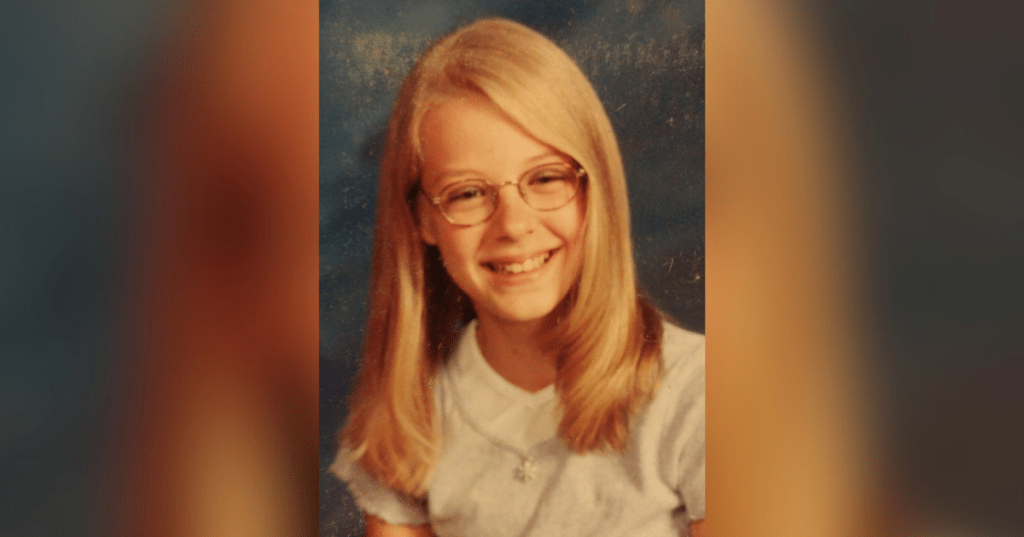
For some children, instability becomes normal. “I thought it was normal for everyone to jump from school to school every month,” said Heather Shrader, who entered foster care as a child before eventually being adopted. Her experience is not unique.
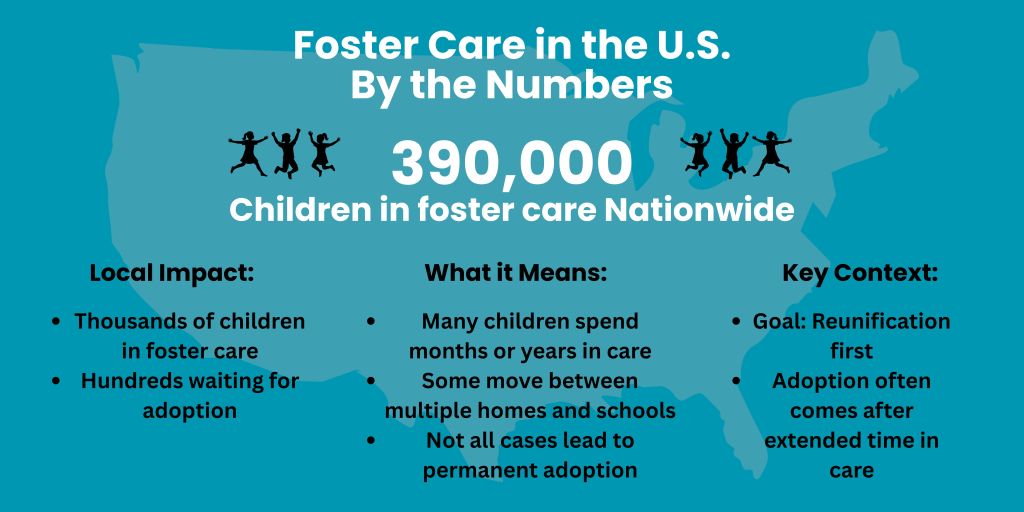
Across the United States, hundreds of thousands of children move through the foster care system each year, often facing uncertainty about where they will live, who will care for them, and what their future will look like. According to data from the U.S. Department of Health and Human Services, more than 390,000 children are currently in foster care nationwide.
This project examines the realities of foster care and adoption through firsthand accounts, expert insight, and data-driven reporting. It explores how the system is designed to work, where it falls short, and how those experiences shape children long after they leave it.
A system built on reunification
The foster care system is designed with one primary goal: reunification.
“The goal is always first and foremost reunification with the birth parents,” said Maggie Peeler, a former caseworker with the Texas Department of Human Services and a former foster parent.
In theory, that goal prioritizes keeping families together. But in practice, the path to reunification can be long and complex. Federal guidelines, including those outlined in the Adoption and Safe Families Act, generally give parents about 12 months to meet court-ordered requirements before other options, like adoption, are considered.
According to the Child Welfare Information Gateway, timelines and outcomes can vary widely depending on family circumstances, services available, and court decisions, often leading to extended stays in foster care for children.
During that time, children may move between multiple placements, schools, and caregivers.
Shrader said that instability affected nearly every part of her early life.
“I didn’t realize that I was even capable academically,” she said. “I never stayed in one place long enough.”
The difference between adoption paths
Not all adoptions follow the same path.
For Micah Stevens, adoption happened at birth.
“It wasn’t ever hidden from me,” Stevens said. “They told me from a really young age.”
He said that consistency made a difference.
“When you’re adopted at birth, everything is consistent,” Stevens said. “But when it happens later, it’s a lot harder on the child.”
That contrast highlights a key distinction in adoption: private adoption versus foster-to-adopt.
Private adoptions, which often occur at birth, typically involve fewer transitions. Foster-to-adopt cases, however, can involve years in the system before a permanent home is found.
According to the Adoption and Foster Care Analysis and Reporting System, thousands of children remain in foster care each year waiting to be adopted, many of them older and more likely to have experienced multiple placements.
When policy meets reality
While policies are designed to protect children and families, experts say real-life outcomes do not always match those intentions.
“Foster care is a very broken system,” Peeler said. “There are things that look good on paper, but when they play out in someone’s life, it may not be so good.”
She said one of the biggest challenges is balancing reunification with a child’s long-term stability.
“I feel like we’re just re-traumatizing kids,” Peeler said. “We pull them out of situations, and then sometimes we put them right back into the same situation.”
Children in the system often face difficult trade-offs. In some cases, staying connected to siblings can mean delaying adoption. In others, achieving permanency may require separation.
“We were split up, and that was extremely difficult,” Shrader said. “It was just another blow of trauma.”
The lasting impact of foster care

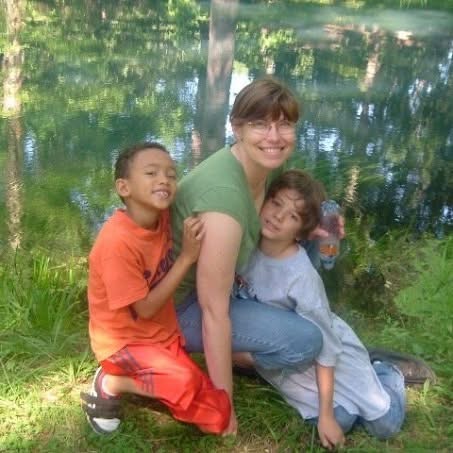

Even in the best-case scenarios, the effects of foster care do not simply disappear.
“Even if you get that child at birth, there has been trauma in that child’s life,” Peeler said. “And I think a lot of people don’t realize that.”
That trauma can affect trust, development, and relationships. “Everything feels temporary,” Shrader said. “Earning that trust takes a lot more work.”
Research from the Pew Research Center shows that children who experience multiple placements are more likely to face challenges in education, mental health, and long-term stability.
Still, outcomes can vary widely depending on support systems and openness within adoptive families.
“Being open with your child about their story ultimately sets them up for more success,” Peeler said.
Changing perceptions of adoption
Adoption has also evolved in how it is viewed publicly.
“I think it’s becoming more of a positive stigma,” Stevens said. “Where it used to be negative.”
Advocates say that shift is partly driven by increased awareness and more open conversations about adoption experiences.
Shrader, who now works with foster and adoptive families through The CALL in Poinsett County, Arkansas, said storytelling plays a key role.
“You can give statistics, but when you tell your story, it changes everything,” she said.
A system defined by people
Despite its challenges, the foster care and adoption system continues to change lives.
For some, that change is immediate. For others, it takes years.
“It changed the trajectory of my life,” Shrader said.
Stevens said his experience shaped his perspective in a different way.
“I’ve never had any bad feelings,” he said. “The life that I was given was amazing.”
But both stories point to the same reality. Outcomes depend heavily on the people involved.
Looking forward
Today, thousands of children across the country are still waiting for permanent homes.
According to the Annie E. Casey Foundation, many will remain in the system for years, navigating a process that can be as uncertain as it is life-changing.
For Shrader, the impact of adoption is clear.
“If it weren’t for those people that said yes,” she said, “I wouldn’t have the life I have now.”

 Inside Family Dynamics
Leave a comment