
Every year, thousands of children enter foster care. For many, finding a permanent home is a long and complicated process.
This story follows up on More Than a System: How Foster Care and Adoption Shape Lives in the U.S. That project focused on the people behind the system and how gaps in foster care can create barriers to adoption. In this piece, I’m looking at the numbers behind the wait for permanency.
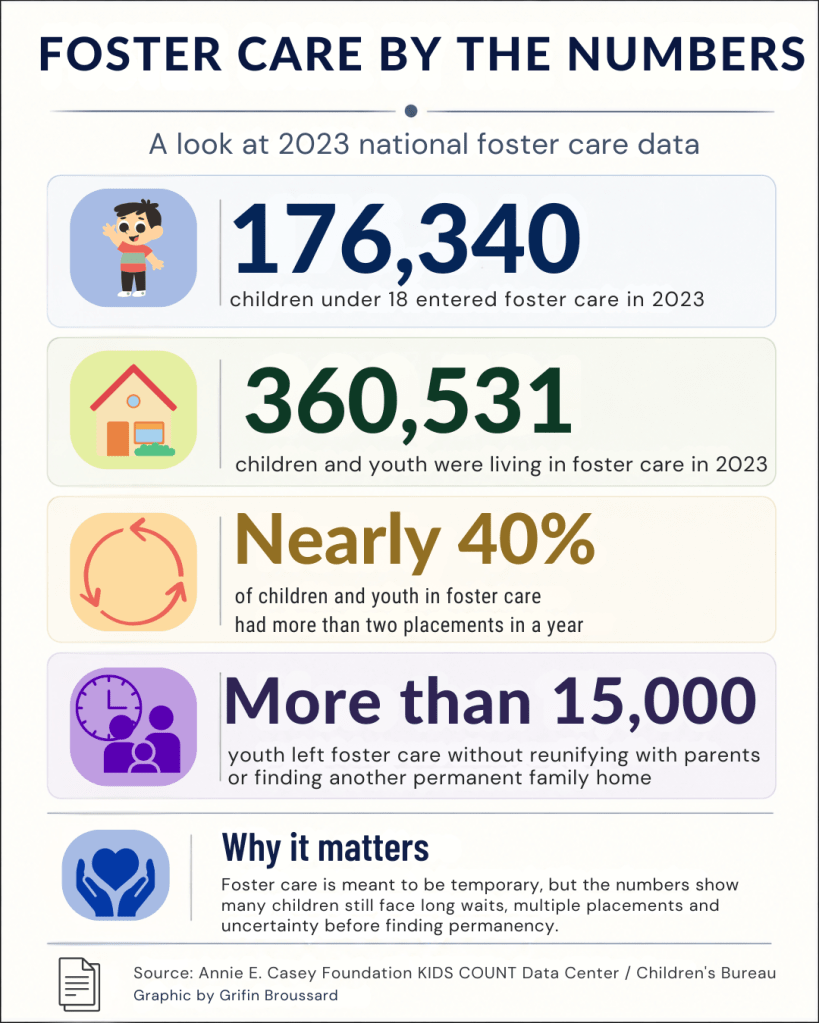
According to the Annie E. Casey Foundation’s KIDS COUNT Data Center, 176,340 children under 18 entered foster care in the United States in 2023. A total of 360,531 children and youth were living in foster care that year.
Those moves matter. Foster care is supposed to be a safe, temporary place. But when placements change often, it gets harder for kids to feel settled. Each move can mean a new home, a new school, new adults, and more uncertainty.
The data also shows that nearly 40% of children and youth in foster care experienced more than two placements in a year. Just under half were reunited with a parent or primary caretaker, while 27% were adopted from foster care. Another 8% left care through emancipation, also known as aging out.
More than 15,000 youth left foster care in 2023 without reunifying with parents or finding another permanent family home, according to KIDS COUNT. The organization notes that aging out can leave young people facing adulthood without the support of a stable family.
These numbers help explain why adoption barriers matter. Court delays, communication problems, staffing shortages, and lack of support are not just system issues. They can affect how long children wait for permanent homes.
For this follow-up story, I created an original infographic using national foster care data to show how many children enter care, how many remain in the system, and how many leave without a permanent family.

 Inside Family Dynamics
Leave a comment